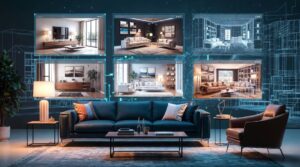
In the world of interior design, visual presentation plays a critical role in communicating ideas effectively. Whether you’re pitching a design concept to a client or planning your own space, having a clear representation of the end result is key. Two popular visualization tools are mood boards and 3D interior rendering. But which one should you use — and when?
In this article, we’ll dive deep into the pros and cons of each method, helping you understand when to use 3D interior rendering vs mood boards for your design projects.
What is a Mood Board?
A mood board is a collage of images, textures, colors, materials, and text that convey the overall feel or theme of an interior design concept. It's typically used in the early stages of the design process to establish a visual direction.

Pros of Mood Boards
- Quick to Assemble: Designers can create a mood board in a short amount of time using digital tools like Canva, Adobe Express, or even Pinterest.
- Inspirational: It sets the tone and inspires creativity by bringing together design elements such as color schemes, furniture styles, and finishes.
- Cost-Effective: Mood boards are inexpensive to create and require minimal technical skills.
Cons of Mood Boards
- Limited Visualization: While mood boards showcase inspiration, they don’t provide spatial context or true-to-life visuals.
- Difficult for Clients to Interpret: Non-designers might struggle to visualize how the items on a mood board will look together in a real space.
- Lack of Detail: Mood boards don’t account for proportions, lighting, or real-world constraints.
What is 3D Interior Rendering?
3D interior rendering involves creating photorealistic digital images of interior spaces using computer software. These renderings show exactly how a space will look, including lighting, shadows, furniture placement, textures, and more.

Pros of 3D Interior Rendering
- Photorealistic Detail: Clients get a lifelike view of the final design, improving understanding and approval rates.
- Accurate Space Planning: It allows for precise layout planning, down to the last inch.
- Better Communication: 3D renderings bridge the gap between designers and clients, reducing misunderstandings and revisions.
- Versatility: Designs can be modified and updated easily without rebuilding the entire presentation.
Cons of 3D Interior Rendering
- Time-Intensive: Creating a high-quality 3D render takes more time compared to a mood board.
- Costly: Hiring a professional 3D rendering service may involve a higher budget.
- Technical Skills Needed: Designers must either learn rendering software or outsource the work to experts.
Side-by-Side Comparison
3D Interior Rendering vs Mood Boards:
| Feature | Mood Boards | 3D Interior Rendering |
|---|---|---|
| Visual Accuracy | Low | High |
| Time to Create | Quick | More Time Required |
| Client Engagement | Moderate | High |
| Realism | Conceptual | Photorealistic |
| Cost | Low | Medium to High |
| Space Visualization | Lacking | Accurate |
When to Use Each Method
Both mood boards and 3D interior rendering have their place in the interior design process.
Use Mood Boards When:
- You’re in the initial brainstorming stage.
- You want to quickly communicate a theme or style.
- You’re working with a limited budget.
Use 3D Interior Rendering When:
- You need to present a detailed, finalized design.
- Your client requires a realistic view before construction.
- You want to reduce the risk of costly revisions later.
In many cases, a combination of both can be incredibly effective. Starting with a mood board to establish a design direction, and then moving into 3D rendering for final presentation, offers the best of both worlds.
Expert Insight on Interior Visualization
According to the American Society of Interior Designers (ASID), effective visualization tools significantly improve client satisfaction and project efficiency. This source offers valuable insights into how digital tools are shaping the future of interior design communication.
Conclusion
Choosing between 3D interior rendering vs mood boards depends on your project goals, timeline, and client needs. While mood boards are excellent for early-stage ideation, 3D renderings shine when accuracy and client approval are critical.
Ultimately, both tools are essential for modern interior designers, and knowing when to use each can elevate the entire design process.